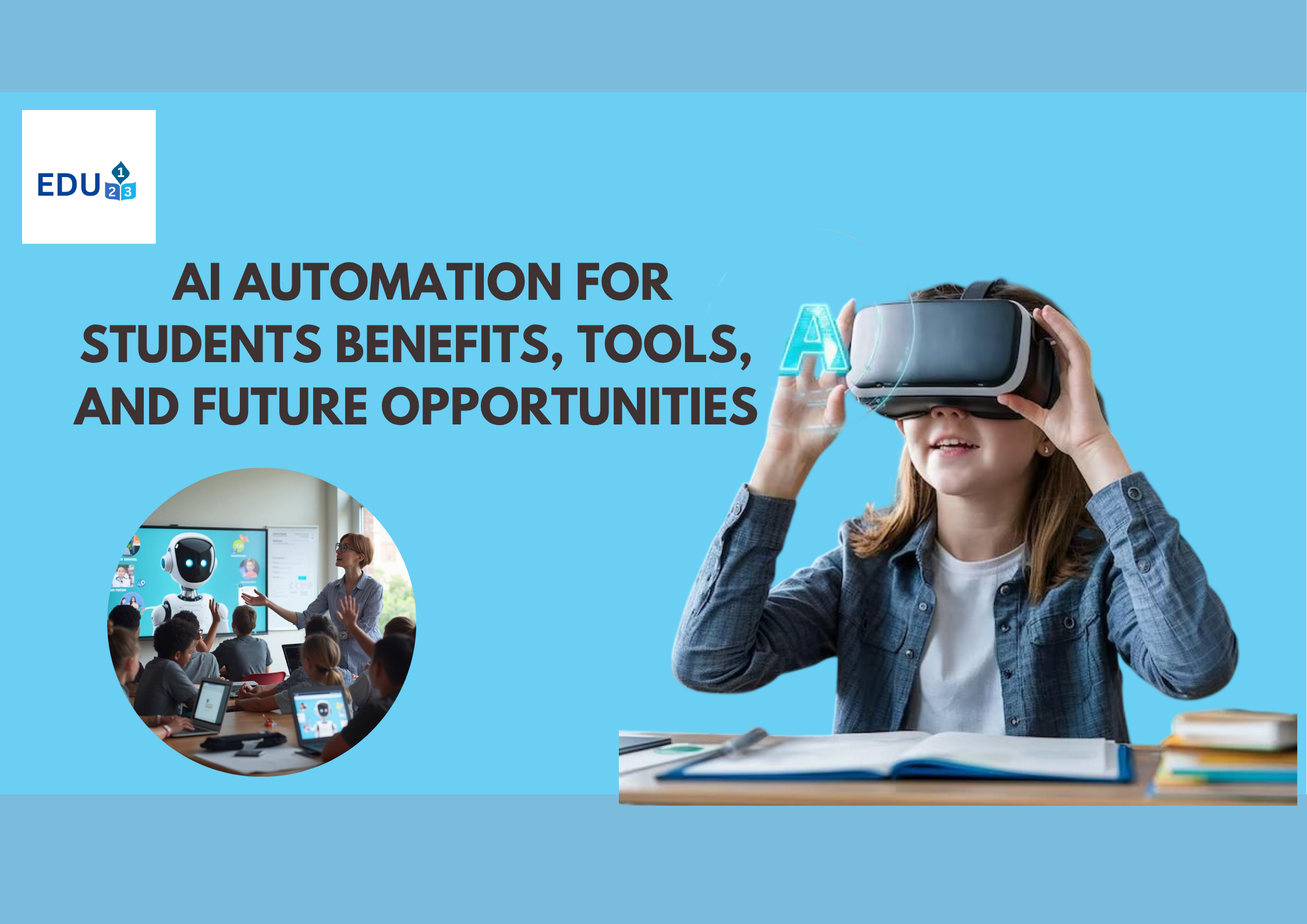

What Is AI Automation and Why Do Students Need It?
AI automation refers to the use of artificial intelligence to perform tasks that would otherwise require significant human time, effort, and cognitive load. For students, this means intelligent systems can assist with writing, research, scheduling, note-taking, language translation, and much more — all with minimal manual input. As a result, students can redirect their energy toward deeper thinking, creativity, and higher-order problem solving.
The need for AI automation in academic life has grown rapidly as the volume of information students must process continues to expand. In 2026, a typical university student encounters more content in a single semester than a student of the 1990s encountered in an entire degree program. Consequently, leveraging intelligent automation is not about taking shortcuts—it is about working smarter and more effectively in an information-dense world. Students who master these tools position themselves far ahead of their peers both academically and professionally. Recognizing this shift, many leading boarding schools in Dehradun are incorporating AI-driven learning tools and digital technologies into their educational frameworks to prepare students for future academic and career success.
How AI Automation Differs from Traditional Digital Tools
Unlike traditional software that follows fixed rules, AI automation systems learn from data, adapt to user behavior, and improve over time. This means a student using an AI writing assistant today will receive increasingly personalized, context-aware suggestions the more they use it. Moreover, AI automation can handle multi-step workflows — from gathering research to formatting citations — that previously required several separate tools and hours of manual effort.
Key Benefits of AI Automation for Students
The benefits of AI automation for students extend well beyond simple convenience. When integrated thoughtfully into daily academic routines, intelligent automation transforms the entire learning experience — making it more personalized, efficient, and outcome-focused. Additionally, it helps students develop critical digital skills that translate directly into career advantages upon graduation.
- Time Savings: AI automation handles repetitive tasks like formatting, summarizing, and scheduling, freeing students to focus on understanding and application of knowledge.
- Personalized Learning: AI-powered adaptive learning platforms analyze individual performance and tailor content to each student’s pace, strengths, and learning style.
- Improved Research Efficiency: Intelligent search and summarization tools reduce hours of literature review to minutes, helping students find relevant sources faster and more accurately.
- Enhanced Writing Quality: AI writing assistants provide real-time grammar corrections, style suggestions, and structural improvements that help students produce stronger academic work.
- Better Organization: AI-powered task managers and smart calendars help students prioritize deadlines, manage workloads, and reduce academic stress significantly.
- Language Accessibility: For international students, AI automation provides instant, high-quality translation and comprehension support, breaking down language barriers in academic environments.
- Career Readiness: Students who develop proficiency in AI automation tools graduate with in-demand skills that employers across every industry are actively seeking in 2026.
Top AI Automation Tools for Students in 2026

Choosing the right AI automation tools is critical to getting the most value from this technology. The market in 2026 is rich with options, but not all tools are equally suited for academic use. Therefore, the following table highlights the most effective and widely adopted AI automation tools for students, organized by their primary academic function and key features.
| AI Tool | Primary Use | Key Feature | Best For | Free Plan? |
|---|---|---|---|---|
| ChatGPT / Claude | Writing & Research | Contextual text generation | Essays, brainstorming, Q&A | ✅ Yes |
| Notion AI | Note-taking & Organization | Smart summaries, task automation | Study planning, project management | ✅ Limited |
| Grammarly AI | Writing Enhancement | Style, tone & grammar correction | Academic papers, emails | ✅ Yes |
| Elicit / Consensus | Academic Research | AI-powered literature search | Research papers, citations | ✅ Yes |
| Otter.ai | Lecture Transcription | Real-time AI note generation | Lectures, seminars, interviews | ✅ Limited |
| Khanmigo (Khan Academy) | Personalized Tutoring | Adaptive learning pathways | STEM subjects, test prep | ✅ Yes |
| Zapier AI | Workflow Automation | Connects apps, automates workflows | Productivity, project pipelines | ✅ Limited |
As shown in the table above, AI automation tools span every dimension of student life — from research and writing to scheduling and transcription. Importantly, many of these platforms offer free plans, making them accessible to students regardless of financial background. The key is identifying which combination of tools best matches your specific academic needs and workflow.
How Students Can Effectively Use AI Automation in Daily Studies
Understanding which tools exist is only the first step. Effectively integrating AI automation into daily academic life requires a strategic, intentional approach. Rather than using AI as a substitute for thinking, the most successful students use it as an amplifier — a system that enhances their own capabilities and helps them produce higher-quality work in less time.
Building an AI-Powered Study Workflow
A well-designed AI automation workflow for students typically begins the night before — using smart task managers to plan the next day’s priorities. During study sessions, AI-powered note-taking apps like Otter.ai capture lecture content in real time, while tools like Elicit help students quickly identify the most relevant academic papers on a topic. Subsequently, AI writing assistants help structure and refine ideas into polished written work, dramatically reducing revision time and cognitive fatigue.
Ethical Use of AI Automation in Academic Settings
As AI automation becomes more prevalent in education, institutions are developing clearer guidelines about its appropriate use. Students must understand the difference between using AI to enhance their learning process and using it in ways that compromise academic integrity. Most universities in 2026 permit the use of AI automation for research, brainstorming, and editing — but require that final submitted work represents the student’s own understanding and analysis. Therefore, transparency and ethical judgment remain essential skills alongside technical AI literacy.
Future Career Opportunities Powered by AI Automation
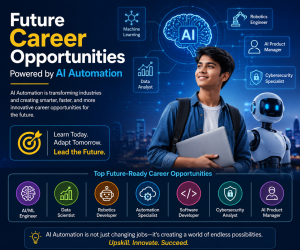
Perhaps the most compelling reason for students to engage with AI automation today is the extraordinary career opportunities it unlocks for tomorrow. Across every industry — from healthcare and finance to education and creative fields — professionals who can design, manage, and optimize AI-automated systems are among the most sought-after and highly compensated in the global workforce.
In 2026, roles such as AI workflow specialist, automation engineer, prompt designer, and machine learning operations analyst are among the fastest-growing career paths worldwide. Moreover, even in traditionally non-technical fields, professionals who understand how to apply AI automation to their domain — whether in marketing, law, journalism, or social work — consistently outperform peers who lack these skills. For students, developing AI automation proficiency during their academic years is one of the highest-return investments they can make in their future.
AI Automation Skills That Employers Value Most
Employers in 2026 consistently highlight prompt engineering, AI workflow design, data literacy, and ethical AI governance as the top competencies they look for in graduates with AI automation experience. Furthermore, soft skills like critical thinking, adaptability, and the ability to work alongside AI systems are increasingly valued alongside technical knowledge. Students who combine domain expertise with AI automation skills are virtually guaranteed to stand out in competitive job markets across the globe.
Conclusion: Embracing AI Automation as a Student in 2026
In conclusion, AI automation represents one of the most transformative forces in modern education — and students who engage with it proactively are positioning themselves for remarkable success both academically and professionally. From reducing the time spent on repetitive tasks to enabling deeper, more personalized learning experiences, the benefits of automation for students are wide-ranging, practical, and growing every year.
Throughout this guide, we have explored what automation means in an academic context, why it matters, which tools deliver the greatest value, and how to integrate these technologies ethically and effectively into daily student life. Furthermore, we have seen how mastering these skills today directly translates into competitive career advantages in a job market that is increasingly organized around intelligent automation and data-driven decision-making.
The most important takeaway is this: automation is not a replacement for human intelligence, creativity, or critical thinking. Rather, it is a powerful amplifier that helps students achieve more, learn faster, and produce higher-quality work than previous generations could have imagined. Students who approach these tools with curiosity, discipline, and ethical awareness will not only thrive in their academic journeys — they will lead the next generation of innovation across every field and industry.
As you move forward, start small — choose one or two automation tools that address your most pressing academic challenges, master them fully, and gradually build a broader, more sophisticated AI-powered workflow. The journey toward becoming an AI-fluent student and professional begins with a single, deliberate step. Take that step today, and the future becomes dramatically more within reach.