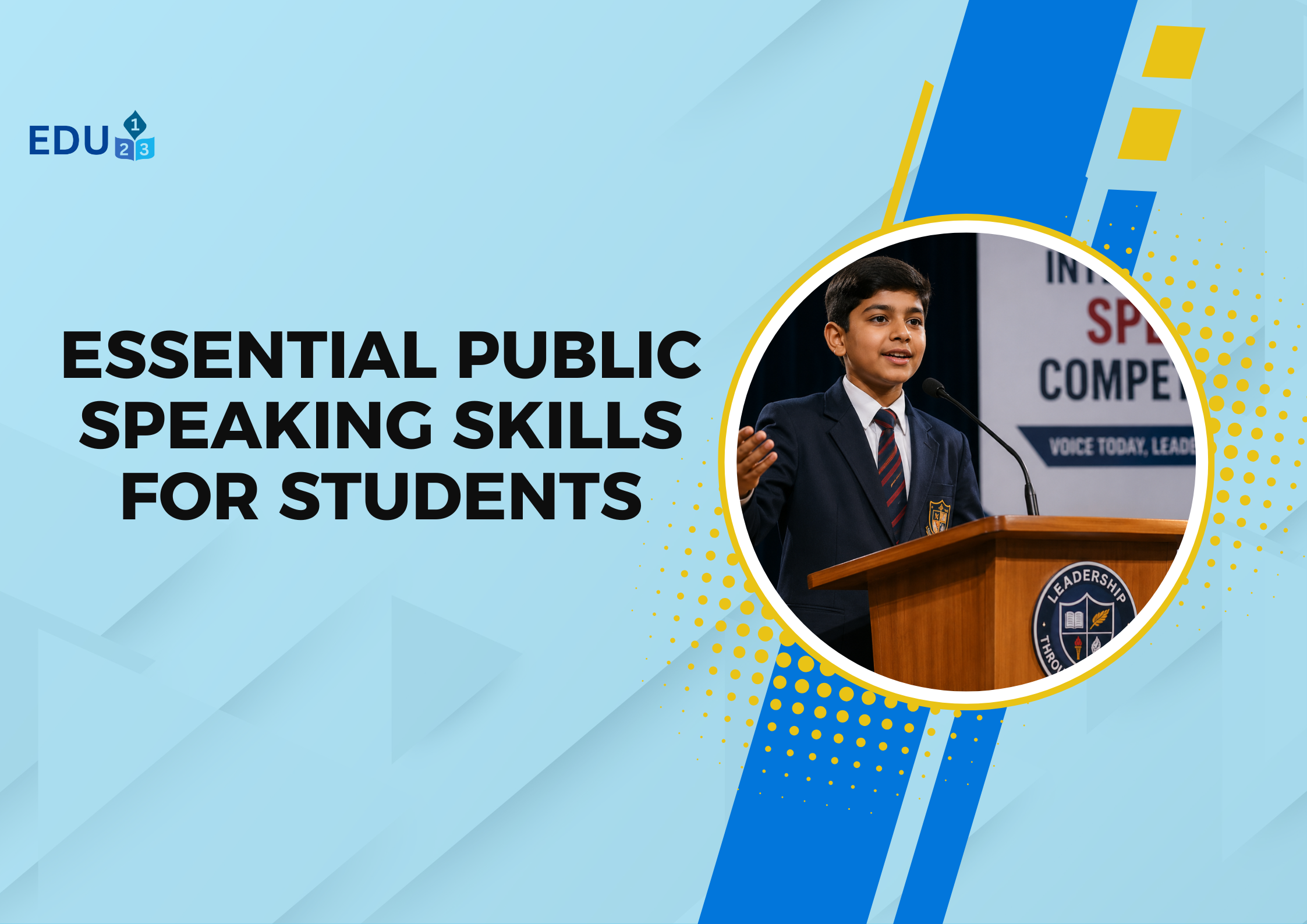

In today’s competitive academic and professional landscape, public speaking skills are increasingly valued by universities, employers, and institutions alike. Whether a student is presenting a science project, debating in a competition, or leading a school assembly, the ability to communicate with confidence sets them apart. Furthermore, developing these skills early in life creates a strong foundation for success in virtually every career path imaginable.
This comprehensive guide explores why Public Presentation matters for students, which key skills to develop, and how schools and families can support this critical area of growth. Additionally, it provides practical strategies students can begin applying immediately to build their oratory confidence and effectivenes.
Why Public Speaking Matters for Students
Public speaking is far more than just talking in front of a crowd. It is a multi-dimensional skill that blends communication, critical thinking, emotional intelligence, and leadership. When students develop strong public speaking abilities, they simultaneously strengthen their capacity to organise ideas, empathise with their audience, and think clearly under pressure. As a result, the benefits extend well beyond the classroom stage.
Research consistently shows that students who practice Public Presentation regularly perform better academically, demonstrate greater self-confidence, and show stronger social skills than their peers who avoid it. Many boarding schools in Hyderabad actively encourage public speaking and presentation activities to help students develop these essential abilities. Moreover, the ability to articulate ideas fluently and persuasively is a direct predictor of success in higher education interviews, job applications, and leadership roles. In essence, Public Presentation is not an extracurricular bonus—it is a core life skill.
Essential Public Speaking Skills Every Student Needs
Becoming a skilled speaker requires developing several interconnected competencies. Each of the following skills plays a vital role in making a student’s public speaking performance genuinely impactful, memorable, and effective for any audience or occasion.
1. Clarity and Organisation of Thought
The foundation of any great speech is a clear, well-structured message. Students must learn to organise their ideas logically — beginning with a strong introduction that hooks the audience, followed by well-supported main points, and a compelling conclusion. This structured approach to public speaking ensures that listeners can follow the argument easily and walk away with a clear understanding of the speaker’s message. Consequently, practising outlines and mind-maps before speaking is an essential preparatory habit.
2. Vocal Confidence and Projection
A student may have brilliant ideas, but if they speak too softly or hesitantly, the message is lost. Vocal confidence — including appropriate volume, pitch variation, pace, and projection is a critical element of effective public speaking. Students should practise speaking from the diaphragm, vary their tone to maintain audience interest, and consciously avoid filler words like “um” and “er.” Over time, consistent practice transforms nervous mumblers into compelling communicators.
3. Body Language and Eye Contact
Effective public speaking is as much about the body as it is about the words. Posture, gestures, facial expressions, and eye contact all communicate confidence and credibility to an audience. Students should practice standing tall, making deliberate eye contact with different sections of the audience, and using natural hand gestures to reinforce key points. Research in communication studies confirms that over 55% of the message received by an audience comes from non-verbal cues alone.
4. Audience Awareness and Adaptability
A truly skilled speaker reads the room and adapts accordingly. Whether speaking to peers, teachers, or parents, adjusting one’s tone, vocabulary, and level of detail to suit the specific audience is a hallmark of exceptional public speaking. Students who develop this awareness early are far better equipped to communicate across diverse professional and social contexts throughout their lives.
How Schools Can Nurture Public Speaking Skills

The school environment plays an enormous role in shaping a student’s relationship with public speaking. Schools that create regular, low-stakes opportunities for students to speak in front of others — through class presentations, morning assemblies, debate clubs, and storytelling sessions — build the comfort and confidence that students need to grow as communicators. Furthermore, constructive teacher feedback helps students identify specific areas for improvement rather than feeling generally discouraged.
Many of the best residential institutions in India understand this deeply. Boarding schools in Dehradun, for example, are widely recognised for their structured co-curricular programmes that embed public speaking and leadership development into daily school life — giving students far more practice opportunities than a typical day school environment can provide. This immersive approach accelerates both skill development and confidence in ways that translate directly to academic and professional success.
Key Public Speaking Skills at a Glance
| Skill | What It Involves | How to Practise | Benefit to Student |
|---|---|---|---|
| Clarity of Thought | Structuring ideas logically | Outline speeches before delivery | Stronger academic presentations |
| Vocal Projection | Volume, pace, pitch control | Read aloud daily for 10 minutes | Greater audience engagement |
| Body Language | Posture, gestures, eye contact | Practise in front of a mirror | Increased perceived confidence |
| Audience Awareness | Adapting tone and content | Speak to varied group sizes | Stronger social intelligence |
| Emotional Control | Managing nerves and anxiety | Breathing exercises, mock speeches | Reduced performance anxiety |
| Persuasion and Rhetoric | Using evidence and storytelling | Debate clubs, essay writing | Stronger leadership presence |
Practical Tips to Improve Public Speaking Confidence
Becoming a confident and effective speaker is a journey, not a destination. Students who commit to consistent, deliberate practice will see measurable improvement over weeks and months. Here are the most effective strategies to accelerate progress in public speaking:
- Start small and build gradually: Begin with one-minute speeches to trusted friends or family before progressing to larger audiences. Each small success builds cumulative confidence.
- Record and review yourself: Video recordings reveal habits like slouching or overusing filler words — that are invisible in the moment but critical to correct for improved public speaking performance.
- Join a speaking club or debate team: Structured groups provide a safe, supportive environment for regular practice, peer feedback, and progressive skill development.
- Study great speakers: Watching and analysing TED Talks, political speeches, and commencement addresses helps students identify techniques they can incorporate into their own public speaking style.
- Embrace mistakes as learning tools: Every stumble in public speaking is a data point, not a failure. Students who reframe nervousness as excitement tend to perform significantly better over time.
- Practise deep breathing and mindfulness: Controlled breathing before and during a speech regulates the nervous system, reduces cortisol, and enables clearer, calmer public speaking delivery.
The Long-Term Career Value of Public Speaking
The value of strong Public Presentation skills extends far beyond school walls. In the professional world, the ability to present ideas persuasively, lead meetings confidently, and inspire teams through compelling communication is consistently ranked among the most sought-after competencies by employers across every industry. Students who invest in developing Public Presentation abilities during their formative years enter the workforce with a significant and lasting advantage.
Additionally, Public Presentation builds resilience. Every time a student faces an audience successfully or imperfectly they grow in their capacity to handle high-pressure situations, recover from setbacks, and persist despite discomfort. These qualities are the very foundation of strong character and long-term professional success, making Public Presentation one of the highest-return investments any student can make in themselves.
Conclusion: Invest in Public Speaking Skills Today
In conclusion, public speaking is not just a school subject or a competition skill it is a life skill that shapes how students communicate, lead, and succeed in every arena they enter. Developing confidence on the stage today prepares young people for the boardrooms, classrooms, and communities of tomorrow.
The journey to becoming a strong Public Presentation practitioner begins with a single, brave step: opening your mouth and speaking, even when it feels uncomfortable. Through consistent practice, constructive feedback, and a willingness to embrace the learning process, every student regardless of their natural temperament can become a compelling communicator. Furthermore, schools, parents, and educators all have a crucial role to play in creating the opportunities and safe environments that allow this growth to happen organically.