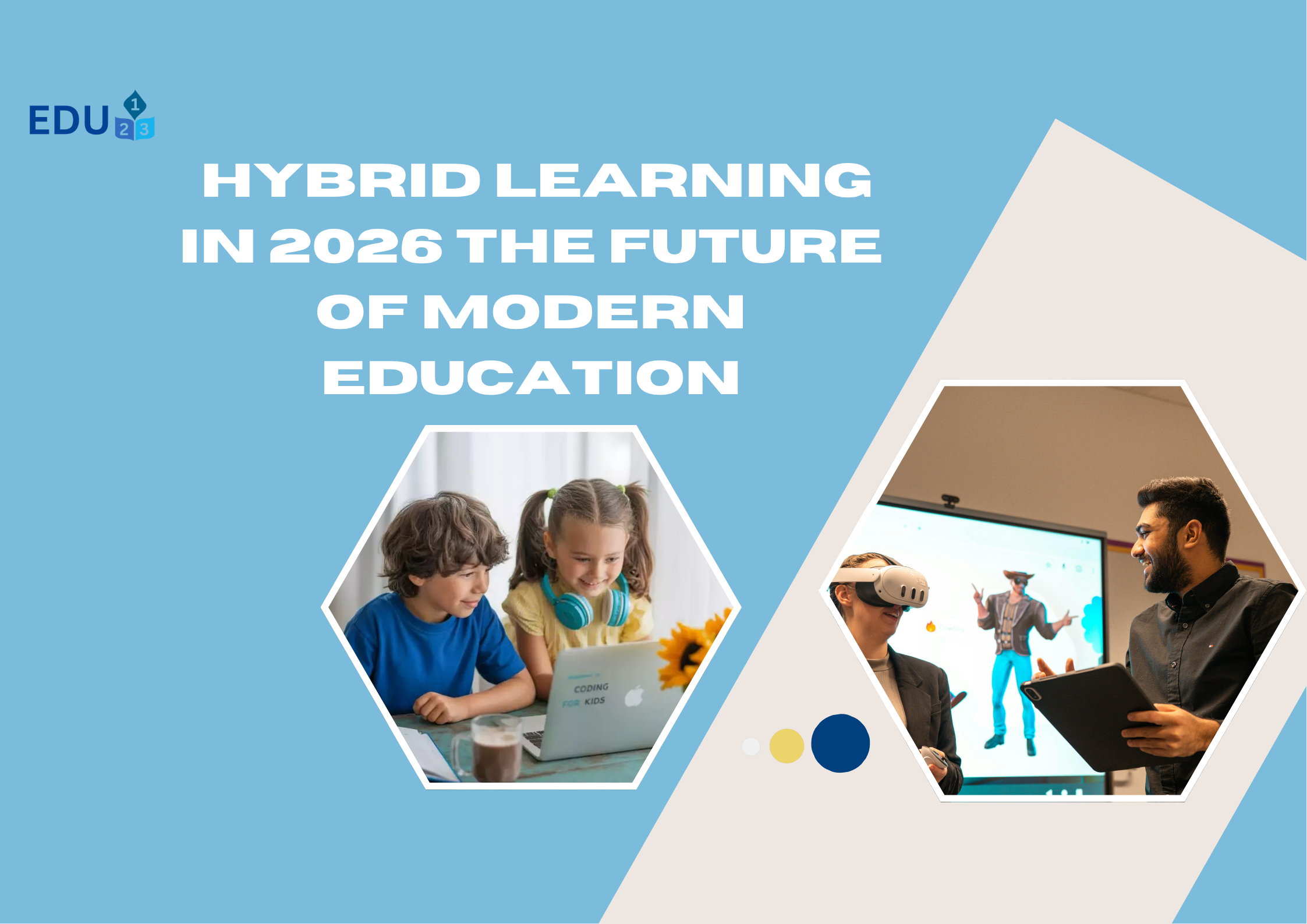

Hybrid learning is no longer a temporary solution born out of necessity it has become the cornerstone of how modern education is designed and delivered. In 2026, schools, universities, and corporate training programs around the world are embracing this flexible approach as the new standard. By combining the best of in-person instruction and digital engagement, hybrid learning offers students and educators an experience that is both structured and adaptable to individual needs.
Whether you are a student navigating a blended schedule, a teacher designing a hybrid classroom, or an institution building out its digital infrastructure, understanding the evolution of hybrid learning is essential. In this article, we explore the key trends, challenges, tools, and strategies shaping the future of education in 2026 and beyond.
What Is Hybrid Learning? A 2026 Definition
At its core, hybrid learning refers to an educational model where some students attend class in person while others participate remotely simultaneously. This is distinct from blended learning, which simply mixes online and offline activities at different times. In 2026, the hybrid class has evolved far beyond basic video conferencing. Today’s hybrid classroom integrates AI-powered engagement tools, real-time collaboration platforms, and adaptive content delivery systems that create a seamless experience for all participants, Future Skills, regardless of their location.
Consequently, what once required significant workarounds ensuring remote learners felt equally present and engaged is now handled through purpose-built infrastructure. Smart cameras that track instructors, AI-generated captions, shared interactive whiteboards, and live polling systems have transformed the hybrid class into a truly equitable learning environment.
Key Hybrid Learning Models Used in 2026

Not all hybrid learning approaches look the same. Institutions have adapted a variety of models depending on their size, audience, and goals. The table below summarizes the most widely adopted models in 2026:
| Model | Description | Best For | Example Setting |
|---|---|---|---|
| Rotation Model | Students rotate between online and in-person learning on a fixed schedule | K–12 schools | Elementary and middle schools |
| Flex Model | Online learning is the backbone; in-person support is available as needed | Self-paced learners | Community colleges, vocational training |
| A La Carte Model | Students take some courses entirely online and others fully in person | High school and university | Universities with open electives |
| Enriched Virtual Model | Primarily online with periodic required in-person sessions | Remote-first students | Graduate and professional programs |
| Simultaneous Hybrid | In-person and remote students attend the same live session together | Mixed-access campuses | Universities, corporate L&D teams |
As you can see, there is no single template. Instead, institutions are choosing models that best reflect their learners’ needs, available technology, and instructional philosophy.
Top Benefits of Hybrid Learning for Students and Educators
One of the most compelling reasons for the rapid adoption of hybrid learning in 2026 is the measurable benefits it delivers to both learners and instructors. Furthermore, these advantages extend beyond convenience they fundamentally change how knowledge is absorbed and retained.
For Students
- Flexibility: Students can learn from locations that suit their lifestyle, reducing commute times and supporting those with health, family, or work commitments.
- Personalized pace: Recorded sessions and asynchronous materials allow students to revisit content as many times as needed, reinforcing understanding.
- Global access: A hybrid class opens doors for international students who cannot relocate, expanding diversity and perspective within classrooms.
- Digital skill-building: Regular interaction with EdTech tools prepares students for a workforce that increasingly relies on digital fluency.
- Improved engagement: Interactive tools like gamified quizzes, breakout rooms, and AI tutors keep learners more engaged than traditional lecture formats.
For Educators
Teachers and professors also benefit enormously. The hybrid classroom allows instructors to differentiate instruction more effectively, using data from digital platforms to identify which students are struggling and providing targeted support. Moreover, educators gain access to a broader set of teaching tools video libraries, AI grading assistants, and learning management systems — that reduce administrative burden and free up more time for meaningful student interaction.
Technology Powering the Hybrid Classroom in 2026
Technology is the backbone of every successful hybrid class. Without the right tools, even the most thoughtfully designed curriculum falls flat. In 2026, the EdTech landscape has matured significantly, and several platforms have emerged as industry standards for hybrid learning environments.
Core Technologies Enabling Hybrid Classrooms
AI-powered Learning Management Systems (LMS) like Canvas, Moodle AI, and Google Classroom Pro now offer predictive analytics that flag at-risk students before they fall behind. Meanwhile, immersive tools such as augmented reality (AR) lab simulations and virtual field trips are making remote participation as experientially rich as being physically present.
Additionally, smart classroom hardware including 360-degree cameras, directional microphones, and presence-detection systems — ensures that remote participants in a hybrid class feel genuinely included rather than sidelined. These innovations have addressed one of the most persistent criticisms of early hybrid learning: the feeling among remote students that they were second-class participants.
Furthermore, AI-driven transcription and real-time translation tools have broken down language barriers, making the hybrid classroom more inclusive than ever before. A student joining from Tokyo can now participate as actively as someone sitting in a lecture hall in London.
Challenges Facing Hybrid Learning Institutions in 2026
Despite its many strengths, hybrid learning is not without its challenges. Transitioning to a hybrid class model requires significant investment in infrastructure, teacher training, and ongoing technical support. Even in 2026, many institutions are still navigating these hurdles.
Equity and Access
The digital divide remains a real concern. While urban students in high-income regions enjoy fast internet and modern devices, rural and lower-income learners may still struggle to participate fully in a hybrid classroom. Bridging this gap requires policy-level intervention and community partnerships, not just technological solutions.
Instructor Preparedness
Not all educators entered the profession expecting to manage both in-room and remote learners simultaneously. Teaching a hybrid class demands a unique skill set one that blends strong facilitation skills with technical confidence. Professional development programs have expanded significantly in 2026, but gaps remain, particularly in under-resourced school systems.
Assessment and Academic Integrity
Evaluating remote students fairly and preventing academic dishonesty in a hybrid learning environment continues to be a complex challenge. AI-based proctoring tools have improved, but they remain imperfect and raise legitimate privacy concerns among students and advocacy groups alike.
The Future of Hybrid Learning: What to Expect Beyond 2026
Looking beyond 2026, hybrid learning is poised to become even more immersive and personalized. Several emerging trends are likely to define the next phase of its evolution.
First, AI personal tutors will become standard components of the hybrid classroom, providing real-time feedback, answering questions outside of class hours, and adapting lesson content to individual learning styles. Second, Extended Reality (XR) — encompassing AR, virtual reality (VR), and mixed reality (MR) will enable students in a hybrid class to collaborate in shared virtual spaces that replicate the feel of physical presence without geographic constraint.
Third, micro-credentialing and skills-based education will accelerate. Rather than completing multi-year degree programs, learners will increasingly pursue modular, hybrid-delivered credentials that are stackable and directly tied to industry outcomes. This shift will redefine what it means to be educated and how institutions measure success.
In summary, the trajectory of hybrid learning points toward a future where the boundaries between physical and digital education dissolve entirely replaced by seamless, learner-centred experiences that can be accessed from anywhere, at any time, by anyone.
Conclusion
Hybrid learning has firmly established itself as the defining educational paradigm of 2026. Far from being a stopgap measure, it represents a thoughtful rethinking of how, when, and where education can happen. The hybrid classroom once an experiment is now a carefully engineered environment that serves diverse learner populations more equitably than traditional models ever could.
For educators, the priority is building confidence and competence in managing a hybrid class effectively. For institutions, the focus must remain on closing access gaps and investing in infrastructure that supports every student equally. And for learners, hybrid learning opens a world of possibilities flexible scheduling, global connections, and personalised instruction that meets them where they are.
As technology continues to advance and pedagogical research deepens, the hybrid learning model will only grow richer and more effective. The future of education is not online-only or in-person-only it is hybrid, and it is already here. Embrace it, prepare for it, and let it transform the way you teach, learn, and grow.