
What Is Holistic Development in Education?
Holistic development in education refers to a comprehensive approach to learning that addresses all aspects of a student’s growth intellectual, emotional, social, physical, creative, and moral. Rather than focusing exclusively on academic achievement, holistic development treats each learner as a complete human being with unique strengths, needs, and potential. As a result, educational systems built on this philosophy produce well-rounded individuals prepared for a complex world.
The concept draws from decades of research in developmental psychology, neuroscience, and pedagogy. Pioneered by thinkers such as John Dewey and later reinforced by Howard Gardner’s theory of multiple intelligences, holistic development recognizes that students learn, grow, and thrive in different ways. Consequently, effective holistic education does not force every learner into the same mold; it creates space for diverse talents, learning styles, and expressions of intelligence to flourish together. This philosophy is increasingly embraced by boarding schools in Dehradun, where students benefit from a balanced environment that nurtures academic achievement, leadership qualities, creativity, emotional well-being, and personal growth.
At its heart, holistic development encompasses five interconnected dimensions: cognitive development (academic and critical thinking skills), emotional development (self-awareness and emotional intelligence), social development (collaboration and communication), physical development (health and motor skills), and values-based development (ethics, empathy, and civic responsibility). Moreover, each of these dimensions supports and reinforces the others, meaning growth in one area naturally strengthens the rest.
Why Holistic Development Matters in 2026

The case for holistic development has never been stronger than it is today. Advances in automation, artificial intelligence, and global connectivity mean that the skills students need most in 2026 are precisely those that machines cannot replicate empathy, creativity, adaptability, and moral judgment. Therefore, schools that cling to purely academic, test-driven models risk producing graduates who are technically proficient but emotionally and socially underprepared.
Additionally, the mental health crisis among young people globally has underscored the urgent need for education that addresses emotional and psychological well-being alongside academic performance. Schools that integrate holistic development into their culture see measurable improvements in student mental health, engagement, and long-term life satisfaction. In short, investing in the whole child is not idealism — it is sound educational strategy for the modern age.
Key Pillars of Holistic Development in Education
Understanding the pillars that support holistic development helps educators, parents, and policymakers design learning environments that truly serve the whole child. Each pillar represents a distinct but deeply connected area of student growth. Together, they form the foundation of future-ready education. The table below summarizes these pillars and their key components:
| Pillar | Focus Area | Key Skills Developed | Example Activities |
|---|---|---|---|
| Cognitive Growth | Academic & Critical Thinking | Problem-solving, analysis, curiosity | Project-based learning, debates |
| Emotional Intelligence | SEL (Social-Emotional Learning) | Self-awareness, empathy, regulation | Journaling, mindfulness sessions |
| Social Development | Collaboration & Communication | Teamwork, conflict resolution | Group projects, peer mentoring |
| Physical Well-being | Health & Motor Skills | Coordination, stamina, discipline | Sports, yoga, outdoor education |
| Creative Expression | Arts & Innovation | Imagination, originality, design thinking | Drama, visual arts, STEM-arts (STEAM) |
| Values & Ethics | Character Education | Integrity, civic responsibility, inclusion | Community service, ethics discussions |
As the table illustrates, each pillar of holistic contributes something irreplaceable to a student’s overall growth. Importantly, no single pillar operates in isolation a student who develops emotional intelligence will naturally become a better collaborator, a more ethical decision-maker, and a more resilient learner. This interconnectedness is what makes the holistic development model so powerful and enduring.
Strategies for Implementing Holistic Development in Schools
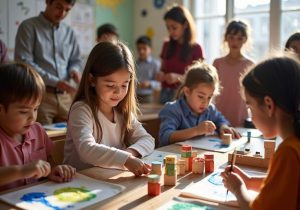
Translating the philosophy of holistic development into daily classroom practice requires intentional strategies and institutional commitment. Fortunately, teachers and school leaders do not need to overhaul their entire curriculum overnight. Instead, they can begin by integrating small but meaningful changes that gradually shift the culture toward whole-child education. Below are the most effective strategies currently being used in leading schools across the world:
- Integrate Social-Emotional Learning (SEL): Embed SEL practices into daily routines through morning check-ins, reflective journaling, and structured peer discussions that build emotional vocabulary and self-regulation skills.
- Adopt Project-Based Learning (PBL): Design interdisciplinary projects that require students to research, collaborate, present, and reflect — building cognitive and social competencies simultaneously.
- Prioritize Physical Education and Movement: Schedule regular physical activity throughout the school day, recognizing that physical well-being directly supports cognitive function and emotional stability.
- Create Space for Creative and Artistic Expression: Protect time for arts, music, drama, and maker-space activities, which develop imagination, design thinking, and personal identity.
- Build Mentoring and Community Programs: Establish peer mentoring, community service, and leadership programs that nurture students’ sense of purpose, belonging, and civic responsibility.
- Train Teachers in Whole-Child Pedagogy: Invest in ongoing professional development that equips educators with the skills, mindsets, and tools to support holistic development across all subject areas.
The Role of Parents and Community
Holistic development does not end at the school gate. Parents and community members play an equally vital role in nurturing the whole child outside formal educational settings. Schools that actively engage families in the holistic learning process through workshops, family projects, and regular communication see significantly stronger outcomes across all developmental domains. Therefore, building a genuine home-school-community partnership is essential to any serious commitment to holistic development.
Holistic Development and Future-Ready Skills

The connection between holistic development and future-readiness is direct and well-documented. Research consistently shows that students who receive a whole-child education develop the very competencies that employers, universities, and communities most value — adaptability, emotional intelligence, creative problem-solving, and ethical leadership. Furthermore, these students are better equipped to navigate career changes, manage stress, build meaningful relationships, and contribute positively to society.
In 2026, forward-thinking institutions are deliberately aligning their development frameworks with global competency standards such as UNESCO’s four pillars of education: learning to know, learning to do, learning to be, and learning to live together. This alignment ensures that holistic education is not only personally enriching but also globally relevant and economically meaningful for every student who experiences it.
Conclusion: Embracing Holistic Development for a Better Future
In conclusion, holistic development in education is the most powerful investment a school, family, or society can make in its young people. As the demands of the 21st century grow more complex and the needs of learners grow more diverse, the whole-child approach offers a proven, evidence-based pathway to genuine educational excellence. It is an approach that honors every student’s full humanity not just their test scores.
The benefits of development extend far beyond the classroom. Students who grow up in holistically supportive educational environments become more resilient adults, more empathetic leaders, more creative professionals, and more engaged citizens. They carry with them not only knowledge and skills but also the emotional strength, moral compass, and social intelligence needed to navigate an uncertain world with confidence and purpose. This is the true measure of an education well given.
Implementing holistic requires commitment at every level from curriculum designers and school leaders to classroom teachers and parents. However, the rewards are immeasurable. When we invest in the whole child, we invest in the whole future. As educators and communities, we have both the responsibility and the extraordinary opportunity to build learning environments where every student can discover who they are, what they value, and how they can contribute meaningfully to the world around them.
The future belongs to learners who are not only academically prepared but also emotionally intelligent, socially skilled, physically healthy, creatively alive, and ethically grounded. Holistic makes that future possible and it begins in every classroom, every day.